Reading the ancient record
The rudder: who steers a life?
The rudder is among Fortuna's best-attested attributes in surviving Roman representations. As a device used to guide a ship, it lends visual form to the idea of direction, changeable outcomes and the course of life.
A rudder does not mean every ancient worshipper understood Fortuna in precisely the same way; attributes vary with object, period and local tradition.
The cornucopia: abundance and prosperity
The horn of plenty is another familiar attribute. Filled with produce, it represents abundance and flourishing. Museum collections preserve Roman objects depicting Fortuna with the rudder and cornucopia together.
The globe: uncertainty and dominion
Some representations include a globe. Its meaning depends on the composition and historical context; modern captions may associate it with the world, power or instability. It should not automatically be read as the same symbol as a wheel.
The wheel and blindfold: later visual traditions
The wheel became especially influential in later European portrayals of Fortune's reversals. A blindfold is familiar in modern artistic images, but it should not be presented as a universal feature of Roman cult statues.
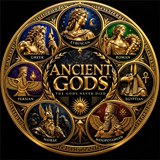
Our Fortuna medallion includes artistic decisions of its own. Ancient Gods distinguishes contemporary interpretation from ancient evidence.
Where was Fortuna worshipped?
Fortuna was worshipped through numerous cult titles, including Fortuna Primigenia at Praeneste. The variety of local forms is one reason the goddess cannot be reduced to a single fixed personality.
Sources and further reading
Continue exploring: Explore Fortuna and the FORT medallion →