Genesis 002 · Roman
Fortuna
The many faces of chance
A Roman goddess whose many cult titles expressed the changing fortunes of people, communities and journeys.
Explore the Roman tradition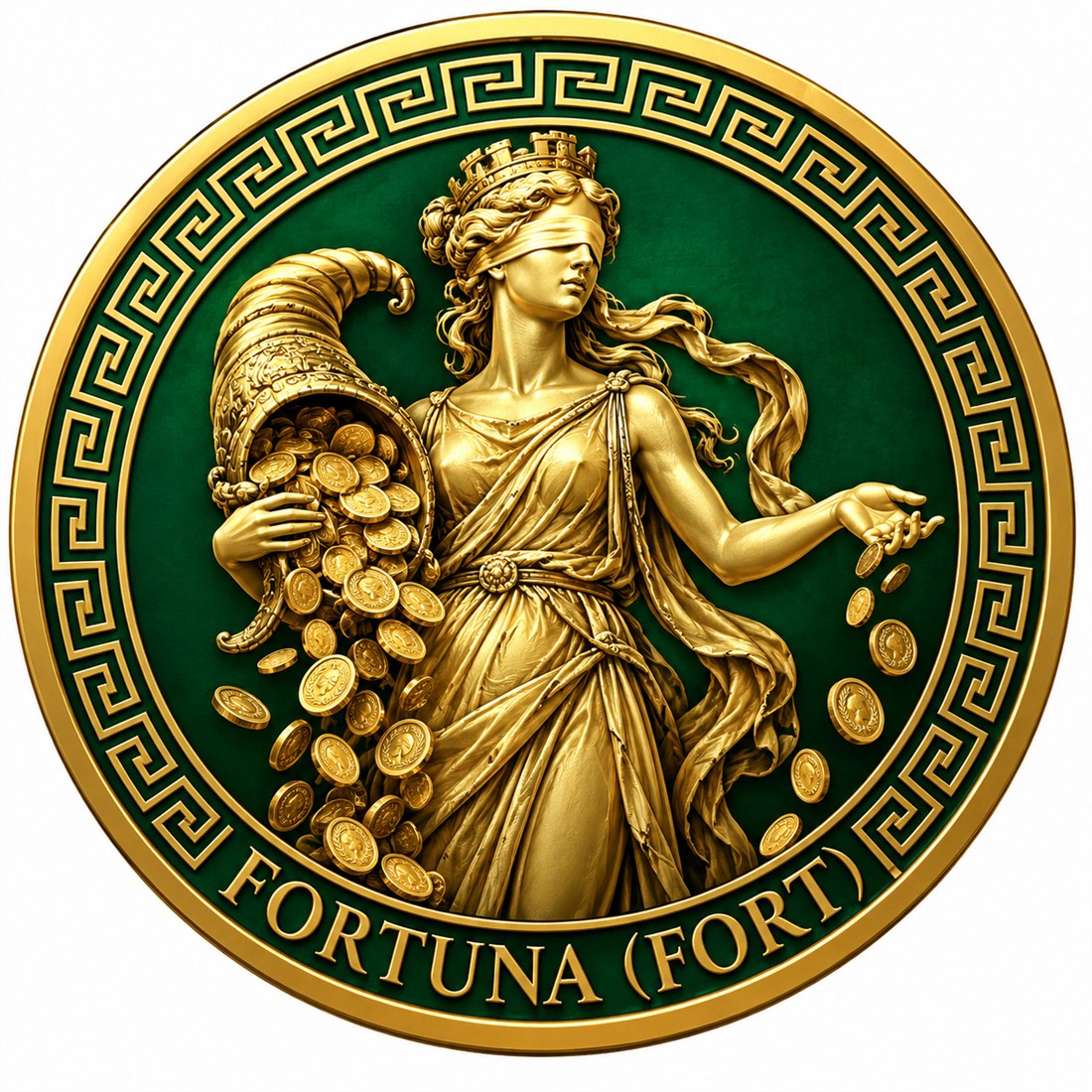
Origins & testimony
A deity in the surviving record
Fortuna was not confined to a single meaning. Roman worship addressed her through many titles tied to places, communities and needs. Important cult centers included Praeneste, associated with Fortuna Primigenia, and Antium.
Roman images often show Fortuna with a rudder and cornucopia. The rudder evokes direction and control over a course; the cornucopia signifies abundance. A globe and, in later reception, the wheel also express instability and change.
Tradition
Fortuna could represent favorable outcome, uncertainty or the shifting conditions of human life. Her many epithets resist a simple definition: public and private communities encountered different aspects of the goddess.
What the evidence allows
Inscriptions, sanctuaries, coins and statuettes document a widespread cult. Greek Tyche strongly influenced Fortuna’s later iconography, while the Roman goddess retained distinct Italic histories and local forms.
Contemporary artifact
The digital medallion
The medallion is contemporary artwork: its cornucopia recalls ancient representations, while the blindfold is an artistic choice, not a standard attribute of surviving Roman images.
The token is a speculative cryptoasset. It does not confer ownership of an ancient artifact, guaranteed utility or financial return.
Mint address · checked 21 Oct 2026
71DxR1aCeYDvHUH3zY5dxD2uGneMRRJn3EPyHUqjpumpView on Pump.fun (opens in a new tab)