Reading the ancient record
What did Livy describe?
In Book 7, chapter 3 of his History of Rome, Livy describes an old custom of driving a nail to mark the passage of years. Citing the antiquarian Cincius, he refers to nails at the temple of Nortia in Volsinii, an Etruscan city. The comparison appears within a discussion of an early Roman nail ritual.
The report is valuable because so little first-hand Etruscan religious writing survives. It is still a Roman account, not a surviving instruction written by Etruscan priests.
Was the nail a symbol of fate?
Modern explanations often connect the nail to destiny, time and the fixing of events. The ancient passage directly supports the practice of counting years with nails; it does not give a complete explanation of Nortia's powers or ritual theology.
That distinction matters: a compelling symbol for contemporary art is not the same as a proven ancient iconographic attribute.
Where was Volsinii?
Volsinii was an important Etruscan center in central Italy. Its history is complicated by the relationship between the earlier Etruscan city and the later Roman Volsinii. Ancient place names should not be treated as interchangeable with a single modern site without qualification.
What did Nortia look like?
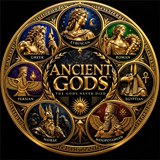
No securely identified ancient portrait of Nortia provides a definitive appearance. Modern portraits, including the Ancient Gods medallion, are imaginative works inspired by surviving testimony rather than archaeological reconstructions.
Sources and further reading
Continue exploring: Explore Nortia and the NRT medallion →